Why Kidney Diseases?
With validated science, strategic regulatory interactions, and deep rare kidney disease expertise, Cypress BioPharma is positioned for rapid clinical advancement.
Understanding Rare Kidney Diseases
Understanding Rare Kidney Diseases
Rare Kidney Diseases: A Complex Landscape
There are over 150 rare kidney diseases—many with complex, overlapping subtypes. Affected populations have historically been under-represented. Cypress BioPharma is building a focused portfolio addressing high-impact, underserved conditions with renally targeted therapies and FDA-validated endpoints.
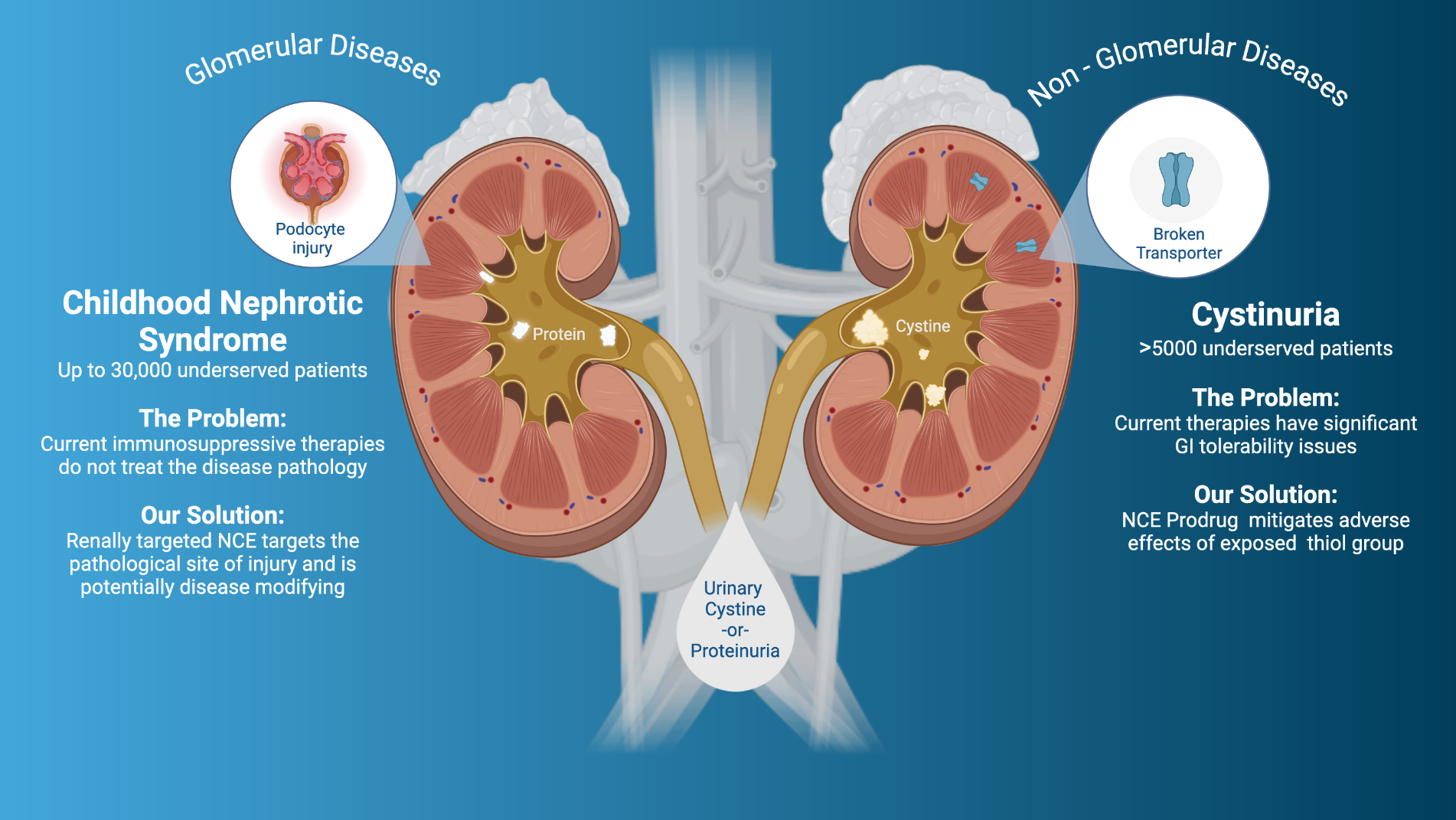
Cypress targets two underserved rare kidney diseases with distinct mechanisms and validated urinary endpoints. (click image to enlarge)
Nephrotic Syndrome
Childhood Nephrotic Syndrome is the Gateway to Podocytopathies
Adults: are biopsied and receive pathological diagnoses of minimal change disease or FSGS etc.
Children: are labeled as idiopathic nephrotic syndrome and receive a clinical diagnosis based on response to steroid treatment
Prevalence
- US population could be up to 30,000+ addressable patients
- EU population appears similar
- Similar range to Cystic Fibrosis
Consequences
If left untreated, patients progress to:
- Chronic Kidney Disease (CKD)
- Dialysis
- End Stage Kidney Disease (ESKD)
- Ultimately, Kidney Transplant

Clinical Characteristics
Injury to the kidney podocyte resulting in:
- Proteinuria, edema, hypoalbuminemia
- Frequent relapsing NS (FRNS; 4-20 events annually)
- Steroid dependent NS (SDNS)
Treatment Landscape
No approved treatments
- Off-label high dose steroids are only available therapy followed by multiple rounds of additional immunosuppressives
- High unmet need –
- Very few clinical trials until ~10 years ago
- In 2017 FDA approved proteinuria as surrogate endpoint for primary glomerular diseases
"When your child is on 80mg of steroids every day, you'll try anything to stop the damage.
"
Cystinuria
Cystinuria
Patients suffer from frequent kidney stone formation, but current therapies significantly interfere with daily life.
Prevalence
- US population estimate ranges from 32,000 to 45,000
- Orphan disease with ICD-10 code
- Linked to autosomal recessive mutations in SLC3A1 or SLC7A9
- Starts at young age
- At least 5,000 underserved patients
Consequences
- Extreme pain leading to interference with normal daily function and use of strong pain medicines
- Psychological anxiety
- Long term kidney damage
- Surgery
- Transplantation
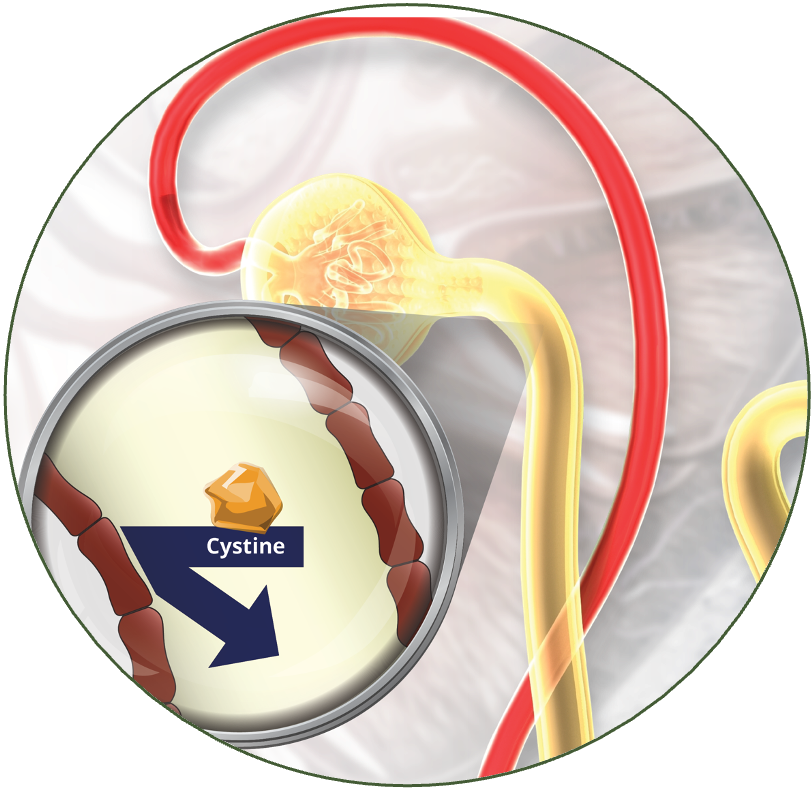
Cystine stone
Clinical Characterization
- Dysfunctional transporter unable to move the amino acid cystine out of urine and into blood
- Results in high concentrations in the urine
- Cystine binds with itself to form crystals that quickly grow into stones
- Patients have frequent kidney stones
Treatment Landscape
Attempts to keep cystine soluble using:
- Hyperhydration
- Change alkalinity
- Change salinity
Bind cystine to prevent stone formation and growth:
- Thiol therapy
Patient Testimonial
"I've been in constant excruciating pain in my back, kidneys, abdomen & flanks. I have a lump under my right rib cage that hurts terribly, nausea, vomiting, not eating, lost 10 pounds in less than 2 weeks, bubbly, cloudy nasty urine, cola colored urine, not sleeping, headaches, cloudy headed, pissed off at the world & crying non-stop. I'm done…never ending UTI & kidney infections & stones. Something HAS to be done NOW. I'm exhausted & something is very seriously WRONG & I WILL be heard & get some help.
"